Drug Testing in Treatment Courts: Closing Gaps With the PharmChek® Sweat Patch
December 22, 2025
Treatment and recovery courts rely on accurate, defensible drug testing to support accountability, guide treatment decisions, and reinforce behavior change. While traditional testing methods, such as urine analysis, remain common and serve a practical purpose, they also present well-documented challenges that can undermine program goals.
Courts across the country have addressed these gaps by integrating the PharmChek® Sweat Patch as part of a broader testing strategy. The result is more consistent monitoring, fewer disputes over results, and greater flexibility for both staff and participants.
This article outlines how continuous sweat testing works, why courts adopt it, and where it adds the most value.
Why Traditional Drug Testing Creates Gaps in Treatment Courts
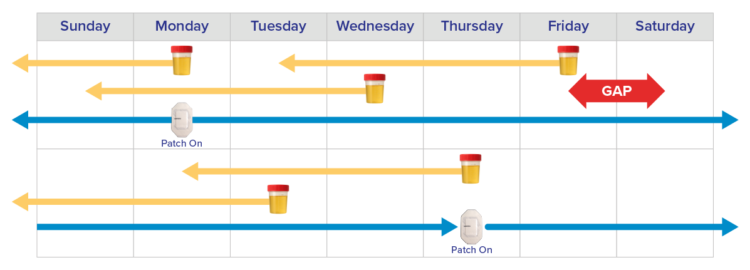
Urine testing captures a moment in time. Even when conducted multiple times per week, it leaves windows where substance use can go undetected. It is also vulnerable to missed appointments, staffing constraints, and manipulation through excessive hydration.
Diluted urine samples remain a persistent challenge in treatment and recovery courts. Excessive hydration can lower drug concentrations below reporting thresholds, creating ambiguity and additional administrative burden. As Judge Greg Pinski, a retired Montana district judge, has observed, “Dilution is one of the most persistent problems treatment courts face. It’s talked about at every conference because it’s uniquely prevalent in the criminal justice setting. Addressing dilution issues was the catalyst that led us to explore the sweat patch as an additional testing method.” Unlike medical environments, where hydration is rarely questioned, justice-involved testing occurs frequently and under conditions that incentivize manipulation, making dilution a recurring and costly issue for court programs.
Courts need tools that reduce uncertainty, close detection gaps, and support clear, defensible decisions.
How the PharmChek® Sweat Patch Works in Treatment Court Programs
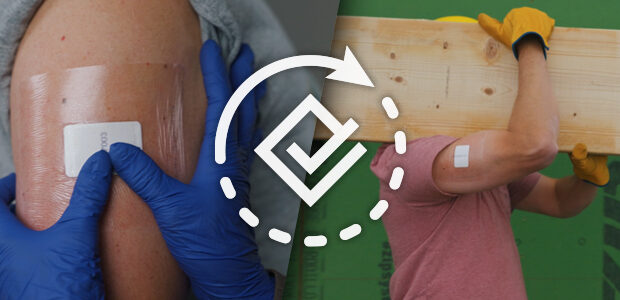
The PharmChek® Sweat Patch is a wearable drug-collection device that has been FDA-cleared and has been in use since the early 1990s. It is applied directly to the skin and worn continuously for a minimum of 24 hours, typically 7 to 10+ days.
During wear, the patch collects insensible perspiration, the constant, invisible release of water vapor through the skin. Drugs and metabolites excreted through sweat are trapped in an absorbent pad protected by a semi-permeable membrane.
At removal, the patch is sealed and sent to the laboratory under a documented chain of custody. All presumptive positives are confirmed using LC-MS/MS, the platinum standard in forensic toxicology. This process identifies specific drug molecules, distinguishes parent drugs from metabolites, and produces results suitable for court proceedings.
Addressing Dilution and Tampering Concerns
Unlike urine testing, sweat testing cannot be diluted through water loading. Increased hydration does not reduce drug concentrations in the patch and may increase sweat production.
The patch is also tamper-evident. Attempts to alter or remove it leave visible signs such as bubbling, discoloration, or damage to the membrane. These features allow properly trained staff to identify potential interference without relying on subjective interpretation or additional validity testing.
Because the patch is worn continuously, it eliminates many common manipulation tactics associated with point-in-time collections.
Program-Level Benefits for Courts and Participants
Courts that incorporate the PharmChek® Sweat Patch often report benefits beyond improved detection.
Reduced Logistical Burden
Weekly patch application and removal can replace multiple observed collections, reducing staff time, scheduling conflicts, and transportation challenges. This is particularly valuable in rural jurisdictions or programs serving participants who travel long distances.
Increased Participant Stability
Continuous monitoring allows participants to maintain employment, attend treatment, and fulfill family responsibilities without frequent interruptions for testing. As Judge Greg Pinski has observed, “From a participant standpoint, the patch was much less invasive. It reduced the time burden and respected privacy in ways traditional testing does not.” This reduced disruption helps participants remain engaged in daily responsibilities while still meeting court accountability requirements.
Support for Incentives and Phase Advancement
As participants progress through a program, testing frequency is often reduced in line with best practice standards. The sweat patch fits naturally into incentive structures by allowing courts to maintain accountability while granting earned privileges such as travel passes or reduced reporting.
Sweat Patch Use During Travel, Employment, and Special Circumstances
The sweat patch is well-suited for situations where traditional testing is impractical or, in some cases, impossible. As Judge Pinski noted from his experience, “The patch allowed us to monitor participants who were remote, on travel permits, or unable to test through traditional methods.”
Courts have used the patch to maintain accountability during approved travel, military service, or extended work assignments. It has also proven valuable during periods when staffing shortages temporarily limit the ability to conduct observed collections.
Because the patch can be worn during normal daily activities, including bathing and swimming, it allows participants to remain compliant without disrupting work schedules, treatment participation, or daily routines.
Understanding Sweat Patch Results and Environmental Exposure Claims
Sweat patch laboratory reports resemble standard toxicology reports, with defined cutoff levels and clear positive or negative findings that courts can interpret consistently.
A key advantage of sweat testing is its ability to distinguish actual drug use from claimed environmental exposure. For many substances, a confirmed positive requires both the parent drug and its metabolite to be present above established thresholds. As Judge Pinski has explained, “When both the parent drug and the metabolite are present, environmental exposure simply does not explain the result.”
Metabolites are produced only after the body processes a drug. Their presence confirms ingestion and cannot be attributed to passive contact or incidental contamination. This distinction has proven critical in resolving challenges, clarifying results for participants and counsel, and supporting due process in court.
Ease of Sweat Patch Implementation and Training in Treatment Courts
The PharmChek team provides certification and training for staff responsible for application, removal, and documentation. As Judge Pinski has observed, “It doesn’t require a toxicology degree. With proper training, coordinators can apply, collect, and manage sweat patch testing effectively.”
Once trained, coordinators and probation staff can integrate sweat testing into existing workflows with minimal disruption. Application, removal, and chain-of-custody procedures are straightforward and designed for real-world court environments.
A Drug Testing Tool That Complements, Not Replaces, Other Testing Methods
The PharmChek® Sweat Patch is not intended to replace all other drug testing modalities. Each specimen type serves a purpose. As Pinski puts it, “The sweat patch is a valuable tool in the court’s tool belt…it fills gaps no other method can.”
Urine testing remains effective for detecting recent use. Oral fluid testing is useful for very short detection windows. Hair testing can reveal long-term patterns.
Sweat testing fills a unique role by detecting drug use continuously over time. Used strategically, it strengthens overall program integrity and reduces reliance on any single method.
Key Takeaways
- Urine testing leaves detection gaps. Even frequent urine testing captures only a snapshot in time and remains vulnerable to dilution, missed tests, and manipulation
- Dilution is a systemic challenge in treatment courts. Excessive hydration can undermine urine results, creating ambiguity and added administrative burden.
- The PharmChek® Sweat Patch provides continuous monitoring. Worn for 7 to 10+ days, the patch detects drug use during the entire wear period, not just a single moment.
- Sweat testing cannot be diluted. Increased hydration does not reduce drug concentrations collected in the patch.
- All presumptive positives are confirmed by LC-MS/MS. LC-MS/MS is the platinum standard in forensic toxicology and produces court-admissible results.
- Parent drug plus metabolite confirms ingestion. This distinction allows courts to reliably address and dismiss environmental exposure claims.
- The patch reduces logistical and staffing burdens. Weekly application and removal can replace multiple observed collections, especially in rural or understaffed programs.
- Participants experience less disruption. Continuous monitoring supports employment, treatment participation, and family responsibilities while maintaining accountability.
- The sweat patch complements other testing methods. It fills detection gaps that urine, oral fluid, and hair testing cannot address alone.
Frequently Asked Questions
What is the PharmChek® Sweat Patch?
The PharmChek® Sweat Patch is an FDA-cleared drug collection device worn on the skin for continuous monitoring. It collects drugs and metabolites excreted through insensible perspiration over a 7–10+ day period.
How long does a PharmChek® Sweat Patch stay on?
The patch is worn for a minimum of 24 hours and typically 7 to 10+ days, depending on program policies and monitoring goals.
How is sweat patch testing different from urine testing?
Urine testing captures recent use within a short detection window. Sweat testing continuously detects drug use throughout the wear period, closing gaps between scheduled collections.
Can a sweat patch result be diluted by drinking water?
No. Sweat patch results cannot be diluted through hydration. Increased water intake does not reduce drug concentrations collected in the patch.
How does the patch address tampering concerns?
The patch is tamper-evident. Attempts to remove, alter, or interfere with it leave visible signs that trained staff can identify during removal.
How are sweat patch results confirmed?
All presumptive positive results are confirmed using LC-MS/MS, the platinum standard in forensic toxicology. This confirmation identifies specific drug molecules and distinguishes parent drugs from metabolites.
Can environmental exposure cause a positive sweat patch result?
For many substances, confirmed positives require both the parent drug and its metabolite to be present above established thresholds. Metabolites are produced only after ingestion, which means environmental exposure alone cannot explain these results.
Is sweat patch testing admissible in court?
Yes. PharmChek® Sweat Patch results have been admitted in courts across the United States when proper chain-of-custody and confirmation procedures are followed.
Does using the sweat patch require specialized medical training?
No. With PharmChek-provided certification and training, coordinators and probation staff can apply, remove, and manage sweat patch testing without medical or laboratory credentials.
Can the sweat patch be used during travel or work assignments?
Yes. Courts commonly use the patch to monitor participants during approved travel, military service, or extended work assignments when traditional testing is impractical.
Does the PharmChek® Sweat Patch replace urine testing?
No. The sweat patch is designed to complement other testing methods. Urine, oral fluid, hair, and sweat testing each serve different purposes based on detection window and monitoring goals.
Building Accountability With Confidence
Effective drug testing supports more than compliance. It reinforces honesty, accountability, and trust between courts and participants. As Judge Pinski has observed, “When courts understand the science and apply it consistently, testing becomes a tool for accountability, not confusion.”
By closing detection gaps, reducing disputes, and providing results confirmed by LC-MS/MS, the PharmChek® Sweat Patch enables courts to focus less on managing testing challenges and more on supporting recovery and long-term behavior change.
For programs seeking a defensible, participant-centered approach to monitoring, continuous sweat testing offers a proven and practical solution grounded in science, consistency, and due process.